Stress vs Burnout: Key Differences & When to Test
The exhaustion is real, but is it just stress or something more serious? When daily pressures become unrelenting, your body sends warning signals that are easy to ignore or misinterpret. Many of us dismiss deep-seated fatigue as a normal part of a busy life, but doing so can be a mistake.
Figuring out whether you're dealing with chronic stress or burnout matters—how you bounce back depends on which one you're facing. While stress might be manageable, burnout is a state of total depletion that demands a different approach.
In this guide, we'll decode the key differences between stress and burnout. We will explore the physical and psychological signals your body sends and help you recognize when it's time to take action. If you feel lost, a great first step is to get a clearer picture of your situation with a professional burnout assessment.
Chronic Stress vs Burnout: Understanding the Fundamental Difference
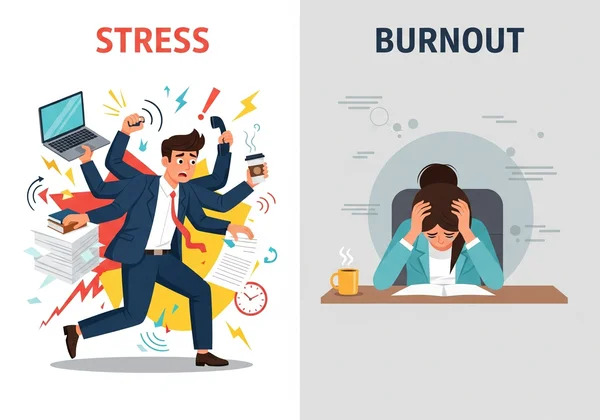
At first glance, chronic stress and burnout look very similar. Both involve feelings of being overwhelmed and exhausted. However, their core nature is distinct. Stress is often characterized by over-engagement—too much pressure, too many demands, and a sense of urgency. You might feel hyperactive and anxious, but you still believe that if you can just get everything under control, things will be okay.
Burnout, on the other hand, is a state of disengagement. It's not about having too much; it's about feeling like you have nothing left to give. The frantic energy of stress is replaced by a sense of emptiness, helplessness, and emotional exhaustion. This fundamental difference is key to identifying what you're truly experiencing.
The Three-Dimensional Nature of Burnout: Emotional, Physical, and Mental Exhaustion
Psychologists define burnout through three core dimensions. This concept was popularized by the Maslach Burnout Inventory (MBI). Understanding these dimensions is essential for accurate self-assessment.
- Emotional Exhaustion: This is the most common symptom. You feel emotionally drained, depleted, and unable to cope with the demands of your job. It's more than just being tired; it’s a deep sense of fatigue that sleep doesn't fix.
- Cynicism or Depersonalization: You may start to feel detached and negative about your job. This can manifest as a cynical attitude toward your work, colleagues, or clients. You might distance yourself emotionally as a coping mechanism.
- Reduced Personal Accomplishment: You begin to feel ineffective and lack a sense of achievement. Even when you complete tasks, you don't feel proud or satisfied. This can lead to a cycle of self-doubt and decreased productivity.
Stress as a Temporary Response vs a Chronic Condition
The timeline is another critical distinction. Stress is typically a short-term response to a specific, identifiable stressor. For example, you might feel stressed about an upcoming project deadline. Once the deadline passes, the stress usually subsides. Your body’s stress response is designed to be temporary.
Burnout, however, develops from prolonged, unmanaged stress. It doesn't appear overnight. This chronic condition builds over weeks, months, or even years. Unlike stress, this state of exhaustion doesn't disappear when a specific project ends. It becomes a persistent state that affects every aspect of your life.
Recognizing Early Warning Signs: Your Body's Communication System
Your body is an intelligent system that communicates its needs through various signals. Learning to listen to these early warning signs can help you intervene before chronic stress escalates into a state of depletion. Ignoring them is like ignoring the low-fuel light on your car's dashboard—eventually, you'll run out of gas.
Physical Symptoms: From Headaches to Weakened Immunity
Before the emotional toll becomes obvious, physical symptoms often manifest. These signs are your body's way of telling you that its resources are being depleted.
- Persistent Fatigue: A bone-deep tiredness that isn't relieved by rest.
- Frequent Headaches or Muscle Pain: Chronic tension can lead to constant physical discomfort.
- Changes in Sleep Patterns: You might struggle with insomnia or feel the need to sleep excessively.
- Weakened Immune System: Finding yourself getting sick more often is a classic sign that your body is under duress.
Emotional Red Flags: When Irritability Turns to Emotional Numbness
The emotional journey from stress to complete exhaustion is a gradual one. Initially, you might feel more irritable, anxious, or short-tempered. This is the "over-engaged" nature of stress. As emotional fatigue sets in, these heightened emotions often give way to a sense of emptiness.
You might start to feel emotionally numb, detached from your work and even from people you care about. A lack of motivation becomes your new normal, and activities you once enjoyed now feel like chores. This emotional blunting is a hallmark of a depleted state.
Behavioral Changes: Productivity Drops and Withdrawal Patterns
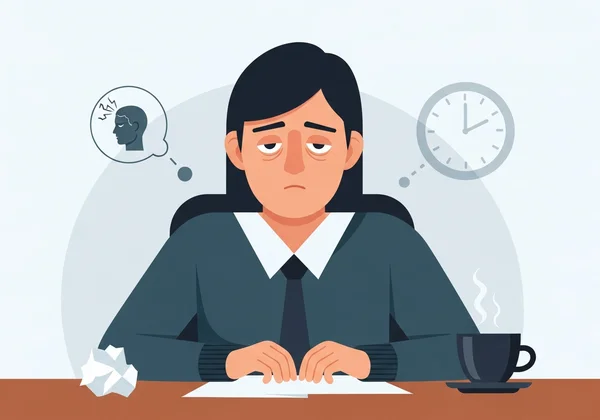
How you act can also be a clear indicator. Under stress, you might work frantically to meet demands. When you're facing burnout, your behavior changes in the opposite direction.
- Procrastination: You might find it difficult to start tasks or meet deadlines you once handled easily.
- Social Withdrawal: You may start avoiding social interactions with colleagues or friends, preferring to be alone.
- Decreased Productivity: Despite putting in long hours, your performance and effectiveness at work decline.
- Using Unhealthy Coping Mechanisms: Some people may turn to food, alcohol, or other substances to cope with their feelings of emptiness.
The Progression Path: How Stress Evolves into Burnout
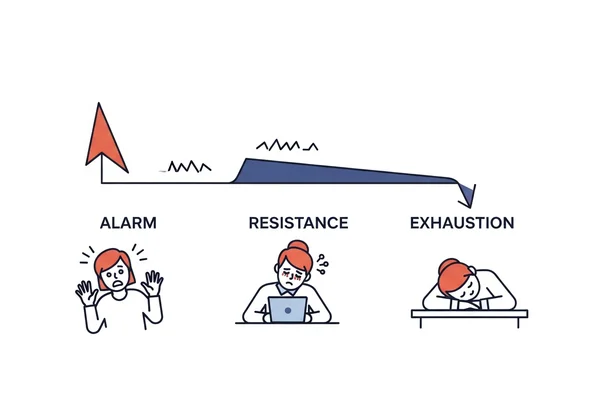
Understanding how stress can morph into burnout helps clarify why early intervention is so important. This progression often follows a pattern similar to the General Adaptation Syndrome, a model describing the body's response to stress.
The Alarm Stage: When Your Stress Response Goes into Overdrive
This is the initial "fight or flight" response. When you encounter a stressor—like a sudden heavy workload—your body releases stress hormones like adrenaline and cortisol. Your heart rate increases, and your energy levels spike to help you deal with the immediate challenge. This stage is normal and healthy in short bursts.
Adaptation and Resistance: Your Body's Struggling Coping Mechanisms
If the stressor doesn't go away, your body enters the resistance stage. It tries to adapt to the high level of stress. While you might appear to be coping on the surface, your body is working overtime to maintain this state of heightened alert. This is where chronic stress begins to take a toll, slowly draining your physical and emotional resources.
Exhaustion: When Your Resources Deplete and Burnout Takes Hold
If stress continues for too long, you eventually reach the exhaustion stage. Your body's resources become completely depleted. You can no longer adapt to the stress. At this point, burnout takes hold, bringing symptoms of emotional exhaustion, cynicism, and reduced accomplishment.
Self-Assessment Tools: When to Consider Professional Testing
If you recognize yourself in these descriptions, what should you do next? While self-reflection is important, an objective assessment can provide the clarity you need to move forward.
The Limitations of Self-Diagnosis: Why Objective Assessment Matters
It's easy to second-guess yourself. You might wonder, "Am I really burnt out, or am I just being lazy?" This kind of self-doubt is common and can prevent you from seeking help. Self-diagnosis is often clouded by emotion and bias.
An objective assessment removes the guesswork. It uses a structured set of questions to measure your symptoms against established scientific criteria. This provides a more reliable picture of your current state, helping you understand the severity of your situation without judgment. For a clear starting point, you can start your test on our platform.

Science-Based Assessment: What Makes a Test Reliable
Not all online quizzes are created equal. A reliable test is based on established psychological research, such as the principles behind the Maslach Burnout Inventory (MBI). These assessments are designed to measure the core dimensions of this condition accurately.
At Burnouttest.org, our free tool is built on these scientific foundations. It guides you through a series of questions about your work-related feelings and experiences, offering an immediate summary of your risk level. This science-backed approach ensures that your results are meaningful and trustworthy.
Interpreting Your Results: From Understanding to Action
Getting your results is just the first step. A good assessment gives you the clarity you need to take meaningful steps forward. Your results can help you:
- Validate your feelings: Seeing your experience reflected in data can be incredibly validating.
- Identify specific problem areas: The results can show you which dimension (exhaustion, cynicism, etc.) is affecting you most.
- Facilitate conversations: A clear summary can be a useful tool for talking to your manager, a therapist, or a loved one about what you're going through.
- Create a plan: With a better understanding of your situation, you can start exploring targeted recovery strategies. An optional, AI-driven report can provide even deeper, personalized insights to guide your next steps.
Your Journey to Clarity Begins with Understanding
Differentiating between stress and burnout isn't just semantics—it's about identifying the right approach to recovery. While stress management techniques may alleviate temporary pressure, burnout requires more comprehensive intervention strategies. It calls for rest, re-evaluation, and setting healthier boundaries.
By recognizing these differences early, you can take appropriate action before your well-being deteriorates further. You don't have to navigate this uncertainty alone. Gaining clarity is the most powerful first step you can take. If you recognize these patterns in your life, you are not alone, and there is a path forward. Consider taking our free burnout test to gain a clearer, science-backed understanding of your situation. It’s a confidential and simple way to begin your recovery journey with personalized insights.
Frequently Asked Questions About Stress and Burnout
How do you test for burnout?
Burnout is typically assessed using scientifically validated questionnaires that measure its core components: emotional exhaustion, cynicism (or depersonalization), and a reduced sense of personal accomplishment. These tests, often based on principles from the Maslach Burnout Inventory (MBI), provide a structured way to evaluate your risk level. An online burnout test is a confidential and accessible first step.
Is it burnout or am I just lazy?
This is a common and painful question. Laziness is typically a choice or a lack of motivation for a specific task without the accompanying emotional and physical exhaustion. Burnout is a state of involuntary depletion where you want to be productive but lack the mental, emotional, and physical capacity to do so. If you are exhausted, feeling cynical about your job, and questioning your own effectiveness, it is far more likely to be burnout than laziness.
What are the symptoms of your body shutting down from stress?
When your body is overwhelmed by chronic stress, it can enter an exhaustion phase. Symptoms may include extreme fatigue that isn't helped by sleep, a weakened immune system (frequent illnesses), chronic headaches, digestive issues, and changes in appetite or sleep patterns. Emotionally, you may feel detached, hopeless, or unable to cope with even minor stressors.
What does burnout fatigue feel like?
Burnout fatigue is a profound sense of exhaustion that goes beyond normal tiredness. It's a feeling of being completely drained—emotionally, mentally, and physically. You might wake up feeling just as tired as when you went to bed. This type of fatigue makes it difficult to concentrate, engage with others, or find the energy for activities you once enjoyed.
What can burnout be mistaken for?
Burnout is most commonly mistaken for stress. However, it can also be confused with other conditions like depression, as they share overlapping symptoms such as fatigue and low mood. A key difference is that burnout is specifically work-related, while depression tends to pervade all areas of a person's life. It is crucial to consult a healthcare professional for an accurate diagnosis. A targeted job burnout test can help clarify if your symptoms are primarily linked to your work environment.