Remote Work Burnout: Signs & Solutions - Take Our Free Burnout Test
The shift to remote work promised flexibility and freedom. For many professionals, however, it has delivered a different reality: the blurring of work-life boundaries and the rise of a new kind of exhaustion. Are you feeling perpetually connected, emotionally drained from video calls, and increasingly disconnected despite being online all the time? You are not alone. This new environment has created unique challenges that can lead to remote work burnout.

Let's dive into the specific warning signs of burnout that emerge when working from home. We will look at why remote settings create distinct stressors and offer sustainable solutions to help you reclaim your well-being. Understanding where you stand is the first step toward making a positive change. A great way to begin is with a confidential burnout test to get a clear picture of your current state.
The Unique Nature of Remote Work Burnout
Working from home isn't just about changing your location; it changes the very nature of work itself. Traditional office burnout often stems from long commutes, office politics, or a difficult boss. Remote work burnout, however, has its own set of triggers. These are often quieter and harder to identify, creeping into our daily lives until we feel completely overwhelmed.
Once you grasp how remote burnout differs from traditional burnout, you're better equipped to tackle it. It’s not about working harder, but about working smarter and healthier in a digital-first world. Recognizing the unique pressures of remote work is the first step toward building resilience against them.
Beyond Office Walls: Why Remote Work Creates Different Stressors
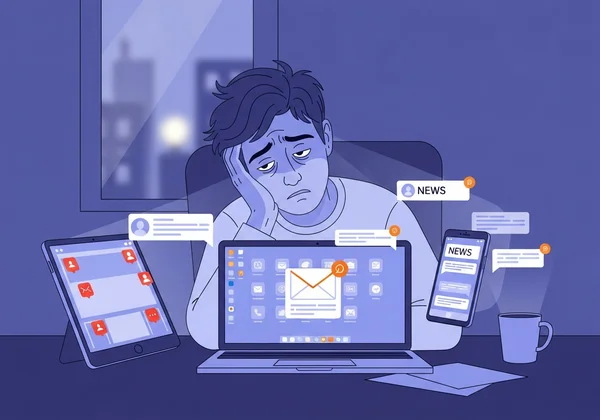
When your home becomes your office, the physical and mental separation between work and personal life disappears. The commute that once served as a buffer is gone. Instead, many remote workers find themselves in an "always on" culture, where notifications and emails follow them from the moment they wake up until they go to sleep.
This constant connectivity leads to digital fatigue. Endless video calls demand a different kind of focus, and the lack of spontaneous social interaction with colleagues can lead to profound feelings of isolation. Without the clear structure of an office environment, it becomes easy to work longer hours, skip breaks, and neglect the very activities that help us recharge. These unique stressors combine to create a perfect storm for remote work burnout.
The 3 Hallmark Signs of Remote Burnout (And How They Differ)
While sharing core elements with traditional burnout, the signs of remote burnout manifest in specific ways. Spotting these unique signs early can help you take action before burnout takes its full toll.
-
Digital Exhaustion: This is more than just feeling tired. It's a deep sense of fatigue from constant screen time, video meetings ("Zoom fatigue"), and managing multiple communication platforms. Digital exhaustion differs from regular work fatigue. It creates a mental fog that makes concentrating on even simple tasks challenging.
-
Heightened Detachment and Cynicism: In a remote setting, detachment isn't about ignoring a coworker in the hallway. It’s a growing feeling of disconnect from your team's mission and your colleagues. You might feel cynical about virtual team-building activities or become irritable during online interactions. This emotional distance can make work feel meaningless and isolating.
-
Loss of Professional Efficacy at Home: This sign is about feeling ineffective, but with a unique remote work twist. You might find it impossible to focus with home-life distractions or feel your productivity has plummeted despite working longer hours. This can create a cycle of guilt and anxiety, as the lines between being "unproductive at work" and "failing at home" become blurred. If these signs feel familiar, it may be time to start your assessment.
Digital Boundaries: Your First Line of Defense Against Burnout
In a remote work world without physical walls, digital boundaries are your most powerful tool. They are the invisible rules you create to protect your time, energy, and mental health. Setting clear boundaries is not a sign of weakness; it's a strategic move to ensure long-term productivity and well-being.
Without intentional boundaries, work can expand to fill all available time, leaving little room for rest and recovery. Establishing these limits helps you regain control over your schedule and create a more sustainable work-life balance.
The Art of "Digital Sunset": Creating Non-Negotiable Offline Times
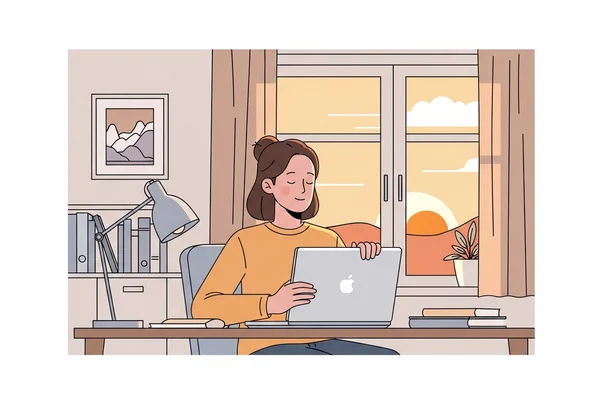
A "digital sunset" is a commitment to a specific time each day when you completely disconnect from work-related technology. This means closing your laptop, turning off email notifications on your phone, and stepping away from your workspace. This ritual signals to your brain that the workday is officially over, allowing it to switch off and begin the recovery process.
To make this effective, communicate your offline hours to your team so they know when you are and aren't available. Be firm with yourself and treat this time as a non-negotiable appointment. Whether it's 6 PM or another time that works for you, a consistent digital sunset can dramatically reduce feelings of being "always on."
Workspace Design for Wellbeing: Physical Cues That Signal Your Brain to Switch Modes
Your physical environment sends powerful signals to your brain. If you work from your dining table or bed, your brain starts to associate those personal spaces with the stress of work. This makes it incredibly difficult to relax and switch off, even after you've finished your tasks.
If possible, dedicate a specific area or room solely for work. When you're in that space, you're in work mode. When you leave it, you're in personal mode. Even small changes can help. For example, having a specific work laptop that you shut and put away at the end of the day creates a powerful physical cue that work is over. Optimizing your space helps reinforce the mental boundaries you're trying to build.
Hybrid Work Challenges: Navigating Two Worlds Without Burning Out
Hybrid work models promise the best of both worlds, but they can also introduce a new layer of complexity and stress. Shifting between a home office and a corporate environment requires constant adaptation, which can be surprisingly draining.
Successfully navigating a hybrid schedule means being intentional about managing your energy, time, and transitions. Without a proactive strategy, the constant context switching can lead to a unique form of fatigue and, eventually, burnout.
The Energy Drain of Context Switching: Why Hybrid Schedules Amplify Fatigue
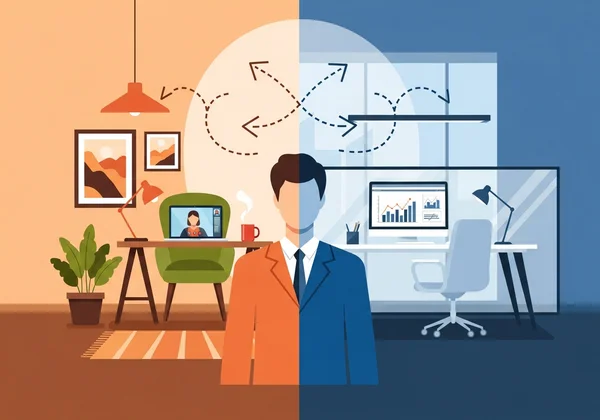
Every time you switch environments—from home to the office or vice versa—your brain has to adjust. This is known as context switching. You have a different setup, different tools, and different social dynamics. You might forget a crucial charger at home or spend the first hour at the office just getting settled.
This constant recalibration consumes significant mental energy. It can feel like you're always preparing for the next transition instead of being fully present in your current environment. This low-level, persistent stress adds up over time, contributing to feelings of exhaustion and making it harder to be productive in either location. If you feel this constant drain, it may be helpful to check your stress.
Creating Seamless Transitions: Rituals That Help You Switch Between Work and Home
To combat the fatigue of context switching, create simple rituals that bookend your workday. These routines act as buffers, helping your brain transition smoothly between work and home modes, whether you are physically commuting or just walking to another room.
For office days, your commute can become a transition ritual. Instead of checking emails, listen to a podcast or music to decompress. For remote days, create a "mock commute" by taking a short walk before you start and after you finish work. Other rituals could include changing your clothes or tidying your desk. The key is to create a clear separation that signals your workday has ended.
Ready to take control of your remote work experience? Start with our confidential burnout test today and get personalized insights to improve your well-being.