How Long Do Burnouts Last: A Realistic Timeline for Recovery
Feeling exhausted, detached, and emotionally drained is a heavy burden to carry. If you are reading this, you are likely asking one desperate question: how long do burnouts last? You want to know exactly when the fog will lift and when you will feel like yourself again.
The short answer is that recovery typically takes anywhere from 12 weeks to over a year. However, this timeline is not set in stone. It depends heavily on the severity of your condition, your environment, and the actions you take today.
Recovering from burnout is a journey, not a sprint. By understanding the specific factors that influence this timeline, you can set realistic expectations and be kinder to yourself during the process. If you aren't sure where you stand on the spectrum of stress, you might start by taking our free burnout test to gain clarity on your current situation.
The Recovery Timeline: From Mild Stress to Habitual Burnout
When you ask, "how long do burnouts last," the answer varies significantly based on how deep into the cycle you are. Burnout is not a binary switch; it is a spectrum. Therefore, the recovery time for someone with mild stress differs greatly from someone experiencing habitual burnout.
Recovering from Mild Burnout (The 3-Month Window)
If you have caught the signs early, you are in a fortunate position. Mild burnout recovery time is usually shorter. Typically, with immediate lifestyle changes and rest, you may start to feel significant relief within 12 weeks (3 months).
At this stage, your symptoms might include occasional irritability, fatigue, or a lack of motivation. However, you likely haven't lost your total capacity to function. By implementing better sleep hygiene and setting firm work-life boundaries now, you can reverse the effects relatively quickly.
Deep Burnout and Chronic Exhaustion (1 Year+)
On the other hand, if you have pushed through stress for years without a break, recovery will naturally take longer. For severe or "habitual" burnout, the timeline often extends to one year or more.
This might sound discouraging, but it is important to be realistic. Your body and mind need time to repair long-term depletion. During this period, you aren't just "resting"; you are rebuilding your entire nervous system's capacity to handle life.
The Recovery Trajectory Graph
Imagine recovery as a "U" shape rather than a straight line up.
- Months 1-3: The Crash (Symptoms may feel worse initially as adrenaline fades).
- Months 4-6: Stabilization (Energy creates a "new normal" baseline).
- Months 7-12: Rebuilding (Gradual return of engagement, joy, and creativity).
Factors That Influence How Fast You Recover
Why does one person bounce back in a month while another takes two years? The answer lies in specific variables. Understanding these can help you answer "how long does burnout take to develop" and, conversely, how long it takes to heal.
Duration of Stress Exposure
Think of burnout like a financial debt. If you have been borrowing energy from your body for five years, you cannot pay that debt back in a weekend. The longer you have been exposed to chronic stress without relief, the longer the recovery path will generally be.
Work Environment: Can You Recover Without Quitting?
This is one of the most common questions. Can you heal in the same place where you got hurt? The answer is complex.
- Yes, if: Your workplace is supportive, allows for role adjustments, and respects your new boundaries.
- No, if: The environment is toxic, the workload is mathematically impossible, or your values fundamentally clash with the organization.
If the "root cause" (the stressor) remains active, your recovery will be significantly slower, or you may plateau.
Support Systems and Professional Help
Isolation fuels burnout. Conversely, connection accelerates healing. Having a therapist, a supportive partner, or understanding colleagues can drastically shorten your timeline. They provide the "safety cues" your nervous system needs to switch out of fight-or-flight mode.
Understanding Your Current Stage (The Key to Recovery)
You cannot map a route if you don't know your starting point. Many people underestimate their condition, thinking they are just "tired," when they are actually in the advanced stages of burnout.
The Risks of Ignoring Burnout: Why Severity Matters
If burnout is left untreated, it can transition into "habitual burnout." This is where physical and mental fatigue become chronic and embedded in your personality. Ignoring the signs doesn't make them go away; it simply extends the how long do burnouts last timeline.
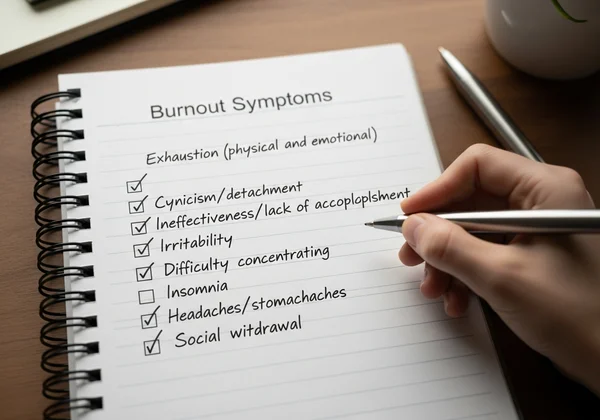
The "Am I Burned Out?" Mini-Checklist
Reflect on the following signs. Do these sound familiar?
- Emotional Exhaustion: You feel drained before the day even begins.
- Cynicism: You feel detached, negative, or numb toward your job.
- Inefficacy: You feel like nothing you do makes a difference.
- Brain Fog: You struggle to concentrate on simple tasks or forget things easily.
Get Clarity with Our Free Burnout Test
If you identified with more than two of the signs above, you might be deeper in the burnout cycle than you realize. Recovery starts with an accurate baseline.
Instead of guessing, we recommend exploring your patterns with a tool designed for self-discovery. You can take a comprehensive burnout test online right now. This educational assessment, based on the Maslach Burnout Inventory (MBI) principles, helps you understand your risk profile so you can build a recovery plan that fits your actual needs.
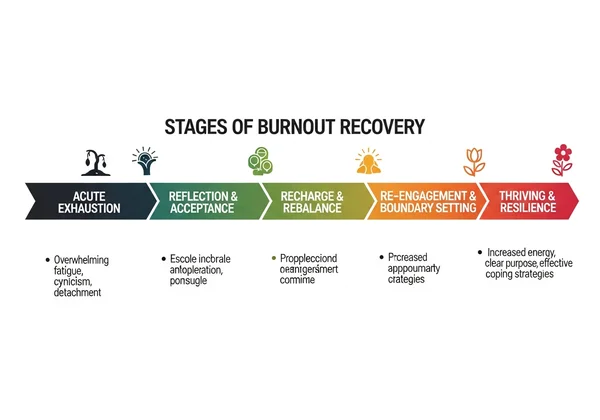
The 5 Stages of Burnout Recovery: A Roadmap
Once you understand your stage, you need a map. Recovery is not just about "doing nothing." It is an active process of restoration. Here is what the stages of burnout recovery typically look like, along with actionable steps for each phase.
Stage 1: Acknowledgment and Safety
The first step is stopping the damage. You cannot heal if you are still bleeding energy.
- Action: Admit to yourself, "I am burned out."
- Action: Visit a doctor to rule out other physical conditions.
- Action: Remove immediate stressors (e.g., take medical leave or decline new projects).
Stage 2: Rest and Detachment
This is the "hibernate" phase. Your goal here is physical restoration, not mental productivity.
- Sleep First: Prioritize 8-9 hours of sleep over everything else.
- Digital Detox: Limit social media and news that spike your cortisol.
- Low Effort: Engage in passive activities like walking in nature or listening to music.
Stage 3: Rebuilding and Setting Boundaries
As energy returns, you don't spend it all at once. You invest it in building guardrails.
- Define Limits: Clearly state your working hours and stick to them.
- Say No: Practice declining requests that drain you without explaining yourself.
- Re-evaluate Values: Ask yourself, "Does this job still align with who I am?"
7 Signs You Are Finally Recovering from Burnout
Because the process is slow, it is easy to miss the progress. If you are wondering if your efforts are working, look for these signs you are recovering from burnout.
Energy Returns in the Mornings
Instead of waking up with a sense of dread or heaviness, you start to feel neutral or even slightly rested. You don't need three coffees just to function, and the alarm clock isn't your enemy.
Cynicism Fades into Curiosity
When you are burned out, the world looks gray and irritating. One major sign of recovery is the return of curiosity. You might find yourself interested in a hobby, a book, or a conversation just for the joy of it, not because it's "useful."
You Can Relax Without Guilt
This is a huge milestone. In the depths of burnout, resting feels like failing. As you recover, you begin to view rest as a necessary and enjoyable part of life, rather than something you have to "earn" through suffering.

Patience is Productive: Your Journey to Wellness
So, how long do burnouts last? As long as it takes for your unique system to repair itself. Whether it is 12 weeks or 12 months, remember that the time you spend recovering is not "wasted." It is an investment in a sustainable future.
If you feel stuck, consider seeking support from a mental health professional. Burnout can sometimes overlap with depression, and a professional can help distinguish between the two.
Be patient with yourself. Healing is happening, even when you can't see it. If you want to track your progress over time, you can always return to check your burnout score and see how your levels change as you implement these recovery strategies.
Frequently Asked Questions
Is burnout permanent?
No, burnout is not permanent. It is a reversible condition. With the right combination of rest, lifestyle changes, and boundary setting, your brain and body can recover their capacity for engagement and joy.
What is the 42% rule for burnout?
The "42% rule," popularized by Emily Nagoski, suggests that we should spend roughly 42% of our time (about 10 hours a day) on rest and recovery activities. This includes sleep, eating, connecting with loved ones, and physical movement to "complete the stress cycle."
How does burnout differ from daily stress?
Stress is characterized by "too much"—too much pressure, too much urgency. Burnout is characterized by "not enough"—not enough motivation, not enough emotion, not enough caring. Stress makes you anxious; burnout makes you detached.
How long does it take to beat habitual burnout?
Habitual burnout is the most severe stage. Because physical and mental symptoms are chronic, recovery typically takes the longest—often a year or more. Professional therapy is highly recommended at this stage to navigate the deep-seated patterns causing the burnout.